
Tier planning
Set your own pricing by tier with intent-based positioning that supports retention and long-term margin.
This page helps local businesses frame offer tiers, margin targets, and upgrade timing while keeping launch friction low.
Instead of guessing, use a structured pricing approach tied to conversion and retention signals so each offer supports both growth and margin.
Review program categories, suggested customer pricing, and commission previews before deciding how to structure your first offer and your follow-on tiers.
Review offer categories before setting your customer-facing pricing.
Use program mix to decide which tiers deserve premium positioning.
Keep your first launch simple enough to measure clearly.
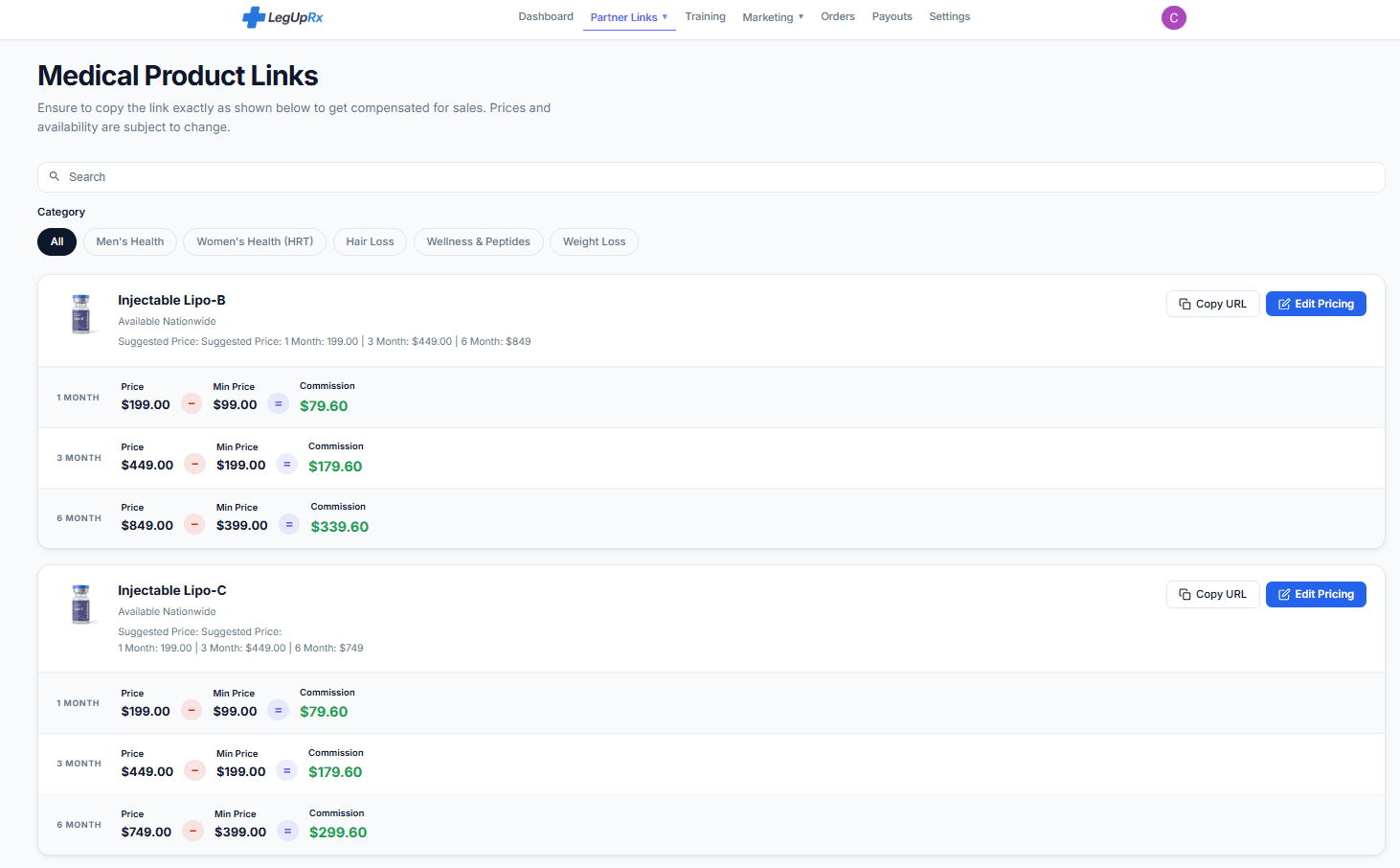
The pricing portal helps partners understand suggested pricing, commission previews, and offer-level economics before deciding how to position telehealth programs for their audience.
Compare verified-intake performance as you test different offers.
Watch margin outcomes instead of guessing what customers will tolerate.
Use measured milestones to decide when to upgrade or expand.
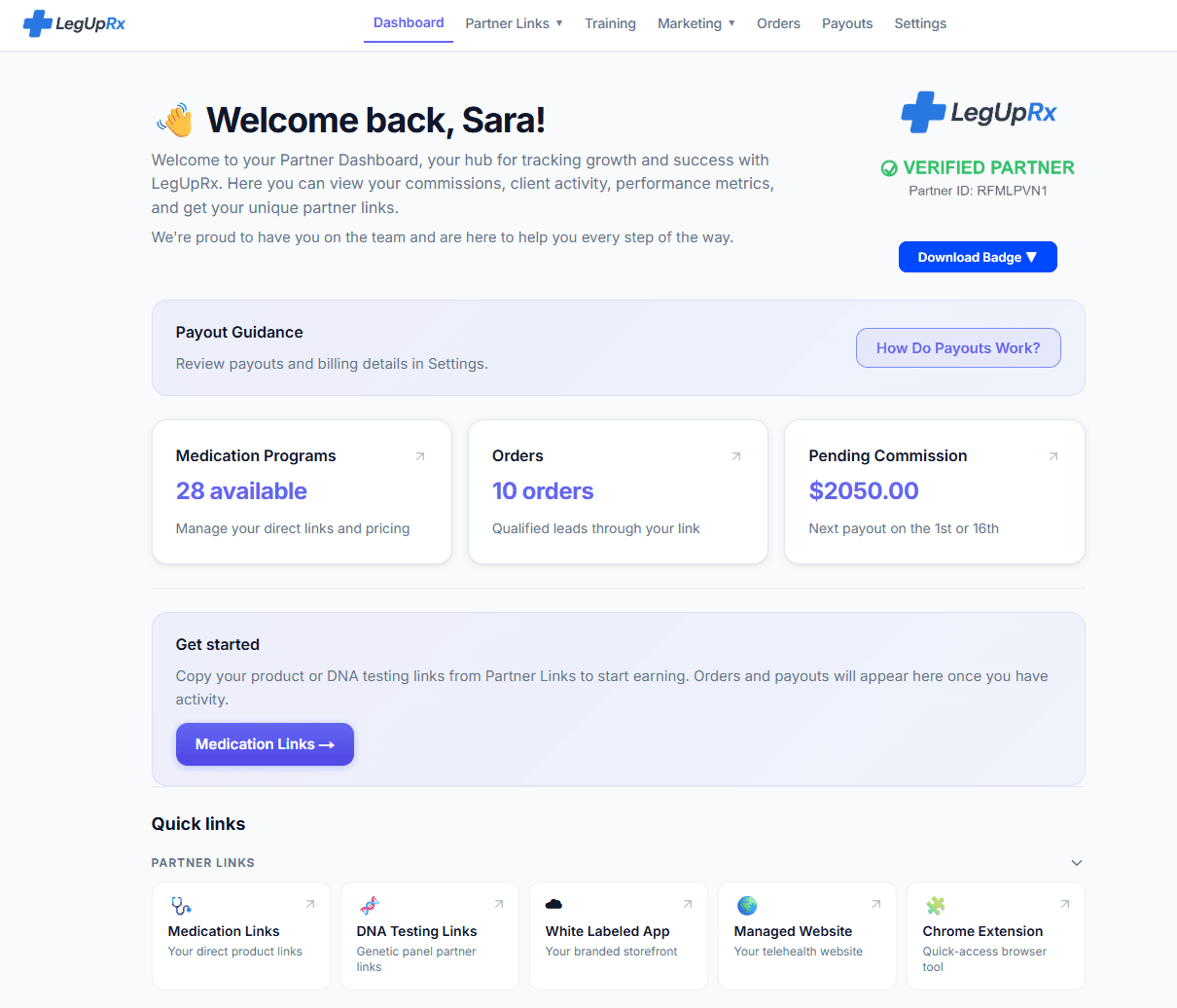
Set your own pricing by tier with intent-based positioning that supports retention and long-term margin.
Set target spreads by program category and track outcomes over time.
Use performance milestones to decide when to expand tools and service layers.
Telehealth pricing is an operational decision, not just a copy decision. Partners set customer-facing prices above LegUpRx minimums and review commission previews in the portal before launch. That visibility helps local businesses model margin without guessing what customers will tolerate.
Suggested pricing is shared by program category once you onboard. Book a meeting to review pricing, and use the telehealth for local businesses guide to match tiers to your audience and acquisition channels.
Partner earnings come from the spread between your retail price and platform minimums on completed verified intakes. Start with one hero offer, define target conversion thresholds, then expand into Care Services and elective programs once baseline performance is stable.
Medical services are trust-driven, so avoid competing as the cheapest option in your market. Instead, use milestone-based upgrades tied to verified-intake volume and retention signals inside the telehealth partner program workflow.
Once demand is validated, many partners add a managed telehealth website and connect it to the white-label telehealth platform so pricing, branding, and checkout stay aligned as traffic grows.
Licensed fulfillment and compliance workflows remain managed by LegUpRx throughout, so pricing changes stay focused on offer mix and margin, not on rebuilding clinical operations.
Is there a one-size-fits-all telehealth price?
No. The right price depends on your audience, offer type, and competitive positioning in your market.
How should we evaluate pricing changes?
Track conversion rate, verified intake quality, and retention indicators before and after each change.
When should we move beyond the starter tier?
Upgrade when demand is validated and additional capabilities materially improve revenue or operational efficiency.
Review the adjacent parts of the LegUpRx model that support launch, conversion, and expansion.
Book a meeting with our team, or buy the yearly plan now to launch under your brand.